

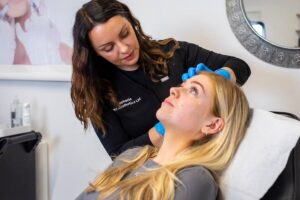
The world of aesthetic medicine offers powerful tools to manage the visible signs of aging. Anti-aging injections provide a minimally invasive way to rejuvenate the skin, restore volume, and smooth wrinkles. Understanding the science behind these popular treatments can help you make informed decisions about your own aesthetic journey. Let’s explore how five key types of injectables work to turn back the clock.
Botulinum Toxin (Botox)
Perhaps the most well-known anti-aging injection, Botulinum toxin works by targeting dynamic wrinkles—the lines formed by repeated muscle movements like frowning or squinting. It acts as a neuromodulator, temporarily blocking the nerve signals that cause specific facial muscles to contract. By relaxing these muscles, Botox smooths out existing lines on the forehead, between the brows, and around the eyes, and prevents them from deepening. The result is a smoother, more rested appearance.
Dermal Fillers
While Botox addresses muscle activity, dermal fillers tackle volume loss and static wrinkles, which are visible even when the face is at rest. Most fillers are made from hyaluronic acid (HA), a substance naturally found in your skin that helps it stay hydrated and plump. When injected, these gel-like substances restore lost volume to areas like the cheeks and lips, fill in deep folds such as nasolabial lines, and can even be used for subtle facial contouring. They work by physically adding volume and drawing moisture to the treatment area.
Skin Boosters
Think of skin boosters as a deep-level moisturizer for your skin. Like fillers, they are typically composed of a much thinner, runnier form of hyaluronic acid. Instead of adding significant volume or structure, skin boosters are injected in tiny amounts across a wider area, like the full face or neck. They work by intensely hydrating the skin from within, improving elasticity, texture, and overall luminosity. This treatment boosts your skin’s health and gives it a radiant, dewy glow.
Platelet-Rich Plasma (PRP)
PRP therapy harnesses your body’s own natural healing abilities. The process starts with a simple blood draw. This blood is then spun in a centrifuge to separate the platelets, creating a concentrated plasma rich in growth factors. When this PRP is injected back into the skin, these growth factors stimulate collagen and elastin production, trigger cell regeneration, and improve blood supply. The result is firmer, smoother, and healthier-looking skin over time.
Polynucleotides
One of the latest innovations in regenerative aesthetics, polynucleotides are bio-stimulators that work at a cellular level. These are filtered, sterilized DNA fractions that signal your skin cells to repair and regenerate. When injected, they stimulate fibroblasts—the cells responsible for producing collagen and elastin. They also improve hydration and have an antioxidant effect, protecting skin from damage. Polynucleotides don’t just fill or relax; they actively repair and rejuvenate the skin’s underlying structure for long-lasting improvement in firmness and quality.