

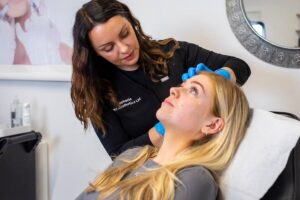

Not every aesthetic concern calls for an injectable filler or a resurfacing treatment. For patients who want to work with their body rather than add something new to it, PRP offers a compelling alternative.
Platelet-Rich Plasma therapy draws on your own biology to support repair and renewal. It has a long track record in sports medicine and wound healing, and its applications in aesthetic skin care continue to grow. If you prefer a low-intervention, regenerative approach, understanding what PRP involves — and what it can realistically achieve — is a good place to start.
What PRP Is and Where It Comes From
PRP is derived entirely from your own blood. That distinction matters. There are no synthetic substances, foreign proteins, or bioengineered compounds involved. Everything used in treatment comes from you.
Blood contains several components: red cells, white cells, plasma, and platelets. Platelets are best known for clotting, but they also carry a concentrated supply of growth factors — signaling proteins that instruct tissues to repair and regenerate. PRP is simply plasma with a significantly higher platelet concentration than normal circulating blood.
How PRP Is Prepared
The process is straightforward. A small blood sample is drawn — comparable in size to what you would give for a routine blood test. That sample is then placed in a centrifuge, a machine that spins at high speed to separate blood components by density.
The platelet-rich layer is isolated and prepared for use. The whole process typically takes less than 30 minutes, and because the product is autologous — meaning it comes from your own body — the risk of rejection or allergic reaction is extremely low.
Why PRP Is Used in Aesthetic Practice
The growth factors concentrated in PRP stimulate several processes relevant to skin health:
- Collagen and elastin production, which supports firmness and structural integrity
- Cell proliferation, encouraging the turnover of healthy new skin cells
- Tissue repair, which can help improve the appearance of scars and sun-damaged skin
- Increased vascularization, supporting better circulation and a healthier baseline glow
PRP does not add volume or physically alter facial structure. What it does is create a more favorable environment for the skin to repair and renew itself. The results are therefore gradual and reflect genuine biological change rather than an immediate cosmetic effect.
Who PRP May Suit
PRP tends to appeal to patients with specific priorities. It is often a good fit for those who:
- Prefer treatments that use natural materials over synthetic injectables
- Want to improve overall skin quality — texture, tone, and radiance — rather than address a single line or hollow
- Are managing concerns such as dullness, mild laxity, acne scarring, or early signs of aging
- Are looking for a treatment that complements other procedures as part of a broader skin health plan
It is also commonly used for scalp treatments, where the same regenerative principles apply to supporting follicle health and reducing hair thinning.
What Patients Typically Seek From PRP
Most patients who choose PRP are not looking for dramatic transformation. They want skin that looks healthier, more even, and more resilient over time. They value the process being rooted in their own biology. And they are willing to allow results to develop gradually — usually across several weeks following a course of sessions.
Setting Realistic Expectations
PRP works through natural processes, which means results build incrementally. Improvements in texture and brightness are often the first changes patients notice, followed by gradual improvements in firmness and tone.
A course of treatments is generally recommended rather than a single session. Maintenance appointments help sustain results over time.
The most important step is a thorough consultation with a qualified practitioner. They can assess whether PRP is appropriate for your skin type and concerns, advise on how many sessions may be beneficial, and help you understand how it might integrate with any other treatments you are considering.
The Bottom Line
PRP is not a shortcut. It is a regenerative treatment that supports what your skin is already capable of — repair, renewal, and resilience. For patients who value that approach, it offers a well-established, low-intervention path to meaningfully better skin. Book a consultation with Ness Aesthetics today.