

If you’ve spent any time researching skin rejuvenation treatments recently, you’ve probably come across three terms that seem to overlap: polynucleotides, skin boosters, and Profhilo. Patients ask us about the difference between these more than almost anything else in clinic, and it’s a fair question — on the surface they look similar. All three are injected in small amounts across the skin, all three are marketed around hydration and glow, and all three sit in the space between skincare and dermal filler. But they work in genuinely different ways, and choosing the right one depends on what your skin actually needs.
What Are Polynucleotides?
Polynucleotides are fragments of DNA, most commonly purified from salmon or trout, that are processed into an injectable gel. Rather than adding volume, they work by supporting the skin’s own repair processes — encouraging fibroblast activity, supporting new collagen production, and improving the skin’s ability to hold on to moisture. They were originally used to support tissue healing before their use in aesthetics became more established, which is part of why interest in them has grown quickly over the past couple of years. If you want to dig into the research behind them, we’ve looked in more detail at whether polynucleotides actually work, including the possible side effects to be aware of.
What Are Skin Boosters?
“Skin boosters” is a broader term for a group of injectable treatments — Profhilo is one example — designed to hydrate and improve overall skin quality rather than add shape or volume. Most skin boosters use hyaluronic acid (HA) delivered as a series of small injections across the treatment area, working mainly by drawing water into the skin and improving elasticity over a course of sessions.
What Is Profhilo, Specifically?
Profhilo is a specific, branded skin booster made from a hybrid of high and low molecular weight hyaluronic acid. It’s known for a “bio-remodelling” effect: after injection it spreads through the tissue and stimulates collagen and elastin production, typically delivered as just two sessions, around four weeks apart.
How They Compare
| Polynucleotides | Skin Boosters / Profhilo | |
|---|---|---|
| Main mechanism | Tissue repair signalling, collagen support | Hydration + bio-remodelling (HA-based) |
| Best suited to | Fine lines, crepiness, scarring, early collagen loss | Dullness, dehydration, overall glow |
| Typical course | Course of sessions, spaced weeks apart | Often 2 sessions (Profhilo), or a short course |
| Downtime | Minimal — some pinpoint bruising possible | Minimal — small bumps settle within hours |
Which Treatment Is Right for You?
As a general guide: if your main concern is dehydration and a lack of glow, a hyaluronic-acid skin booster or Profhilo is usually the more direct route. If you’re noticing early crepiness, textural changes, acne scarring, or a general loss of skin quality that skincare and hydration alone haven’t fixed, polynucleotides are often the better starting point because they work on repair rather than hydration alone. Many patients end up combining the two across a longer-term skin plan, and this is something we’ll always discuss honestly at your consultation rather than recommending everything at once.
What to Expect at Your Appointment
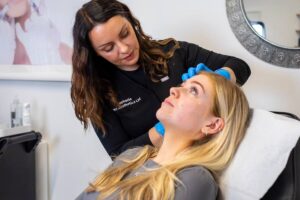
At Ness Aesthetics, every polynucleotide skin booster treatment starts with a proper skin assessment and medical history check, not just a quick chat before we reach for a needle. We’ll talk through what you’re trying to achieve, explain realistic expectations, and offer topical numbing if you’d like it. The treatment itself is a series of small injections across the treatment area and typically takes 30–45 minutes.
Aftercare
Avoid makeup for around 12 hours, and skip strenuous exercise, saunas, and swimming for 24–48 hours. Mild bruising, redness or small bumps at injection points are normal and usually settle within a day or two. Results build gradually over the following weeks as your skin responds, rather than appearing immediately.
Frequently Asked Questions
Can I combine polynucleotides with Profhilo or dermal filler?
Often, yes — but the order and spacing matters, which is exactly what your consultation is for. We won’t combine treatments on the same day without a clear clinical reason.
How long do results last?
This varies by individual and by treatment, and we’ll give you a personalised expectation at consultation rather than a one-size-fits-all number — as a general rule, most patients maintain results with periodic top-up sessions rather than a single one-off treatment.
Do these treatments hurt?
Most patients describe mild discomfort rather than pain, and topical numbing cream is available if you’re needle-sensitive.
How many sessions will I need?
This depends on your skin and goals and is confirmed at consultation — we’ll never recommend more sessions than you clinically need.
Not sure whether polynucleotides or a skin booster is right for you? Book a consultation with Stephanie to get a personalised recommendation, not a generic one.
Reviewed by Stephanie Ness, Aesthetic Nurse Prescriber (RN, DipHE) — BACN member, NMC-registered, Clinical Director at Ness Aesthetics, Stourport. CQC registered clinic. Over 10 years’ experience in aesthetic medicine and 15+ years’ NHS surgical nursing experience.