

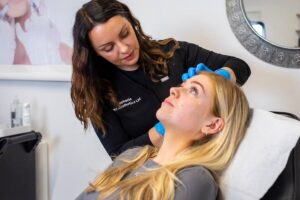
The word “chemical” makes peels sound more intimidating than they are, and it also hides how different one peel can be from another. A light lunchtime peel and a medium-depth medical-grade peel are both technically “chemical peels”, but they use different acids, reach different depths of skin, and are suited to completely different concerns. Here’s how to tell them apart.
How Chemical Peels Actually Work
A peel uses an acid solution to encourage controlled exfoliation of the outer skin layers, removing damaged or dull surface cells and prompting faster, healthier cell turnover. Deeper peels go further, reaching into the upper dermis and stimulating a degree of collagen response as the skin heals.
Superficial Peels
Using ingredients such as glycolic, lactic, salicylic, or mandelic acid, superficial peels only affect the outermost layer of skin. Downtime is minimal to none — often described as a “lunchtime peel” — making them well suited to mild dullness, congestion, and light pigmentation, usually as part of a short course.
Medium-Depth Peels
Medium-depth peels, including TCA-based and medical-grade systems such as Obagi, reach into the upper dermis. Expect noticeable flaking or peeling for roughly three to seven days afterwards. These tend to suit more stubborn concerns — pigmentation, sun damage, acne scarring, and finer lines — where a superficial peel alone wouldn’t make enough difference.
Deep Peels
Phenol-based deep peels reach much further into the skin and involve significant downtime, typically carried out in a medical or surgical setting rather than a standard aesthetics clinic. We don’t offer deep peels at Ness Aesthetics; our medical-grade facials and peels sit in the superficial-to-medium range, which covers the vast majority of patients’ needs safely.
Which Peel Suits Your Skin Concern?
- Congestion or breakout-prone skin — usually a salicylic-based superficial peel, and worth reading alongside our guide to the best facials for acne.
- General dullness, first-time peel — glycolic or lactic acid superficial peel.
- Pigmentation, sun damage, or deeper lines — medium-depth, medical-grade options such as Obagi.
- Sensitive or rosacea-prone skin — gentler formulations with a patch test beforehand, always.
What to Expect During and After a Peel at Ness Aesthetics
We start with a skin assessment, not a one-size-fits-all treatment menu, and will patch test where appropriate. During treatment you may feel warmth or mild tingling. Afterwards, strict daily SPF is non-negotiable — skipping sun protection after a peel is the single biggest cause of poor results or unwanted pigmentation.
Frequently Asked Questions
Do chemical peels hurt?
Most patients feel warmth or tingling rather than pain, particularly with superficial peels; medium-depth peels can feel more intense but are brief.
How many peels will I need to see a difference?
Superficial peels are usually done as a course for cumulative results; medium-depth peels often show more visible change from fewer sessions — we’ll advise based on your skin and goal.
Can I have a peel if I have a darker skin tone?
Yes, with the right assessment and product choice — darker skin tones carry a higher risk of post-inflammatory pigmentation with the wrong peel type, which is exactly why a proper consultation matters.
How soon can I wear makeup or go out in the sun?
This depends on the peel depth and will be confirmed at your appointment, but daily SPF afterwards is essential regardless of peel type.
Not sure which peel is right for your skin? Book a skin consultation with Stephanie before choosing.
Reviewed by Stephanie Ness, Aesthetic Nurse Prescriber (RN, DipHE) — BACN member, NMC-registered, Clinical Director at Ness Aesthetics, Stourport. CQC registered clinic. Over 10 years’ experience in aesthetic medicine and 15+ years’ NHS surgical nursing experience.