

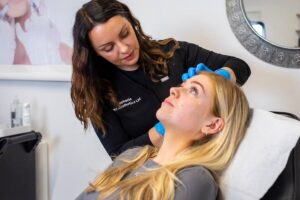
Chemical peels have been around long enough to collect a reputation — and not always a flattering one. Flaking skin, dramatic downtime, and the occasional horror story have made some people dismiss them as outdated or unnecessarily aggressive. That perception is worth challenging.
Today’s professional chemical peels are precise, well-researched treatments designed to support the skin’s renewal process in a controlled way. When chosen correctly and applied by a qualified professional, they are one of the most effective tools available for improving skin health at a deeper level than topical skincare can reach.
How Chemical Peels Actually Work
The skin naturally sheds dead cells and replaces them with newer ones — but that process slows as we age, and it does not always happen evenly. Sun damage, hormonal changes, breakouts, and general environmental stress can all interrupt healthy cell turnover and leave the skin looking dull, uneven, or congested.
A chemical peel applies an acid solution to the skin to accelerate this shedding process. By loosening the bonds between dead skin cells, the peel encourages the outer layers to clear away more efficiently. As fresher skin comes to the surface, the appearance of texture, tone, and clarity can all improve.
Simultaneously, the skin’s healing response is activated. Collagen production increases, circulation improves, and the overall quality of the skin at a structural level gradually strengthens.
What Concerns Peels May Help With
Chemical peels are versatile, which is part of what makes them useful. They are commonly used to address:
- Uneven skin tone and dullness
- Sun damage and visible pigmentation
- Post-blemish marks and mild acne scarring
- Congested pores and breakout-prone skin
- Fine surface lines and rough texture
- Overall skin quality that has plateaued with home care alone
They are not a solution for every concern — deep structural loss or significant laxity, for example, requires different interventions — but for surface-level and mid-depth skin issues, they consistently deliver meaningful results.
Superficial vs. Stronger Peels: What the Difference Means
Not all chemical peels work the same way. The depth of a peel depends on the type of acid used, its concentration, and how long it is in contact with the skin.
Superficial peels — often using glycolic acid, lactic acid, or low-strength salicylic acid — target only the outermost layer of skin. They are well-suited for regular maintenance, improving general radiance, and managing mild breakouts. Downtime is minimal, and most people return to normal activity immediately.
Medium-depth peels use stronger formulations, such as trichloroacetic acid (TCA), and penetrate further into the skin. They are more effective for treating moderate pigmentation, acne scarring, and visible texture. Expect several days of peeling and sensitivity during recovery.
Deeper peels deliver more significant results for advanced concerns but require careful assessment, longer recovery, and strict aftercare. They are not appropriate for everyone and should only be carried out by experienced practitioners.
Who Is a Good Candidate?
Most adults with concerns related to skin tone, texture, or clarity can benefit from some form of chemical peel. However, a few factors shape which peel — if any — is appropriate:
- Skin type and tone influence which acids are safest and most effective. Some formulations carry a higher risk of post-inflammatory hyperpigmentation in deeper skin tones and require careful selection.
- Active skin conditions such as open breakouts, eczema, or rosacea may need to be managed before treatment.
- Recent use of certain skincare ingredients or medications can affect how the skin responds and may require a pause before treatment.
This is precisely why a professional consultation is not optional — it is the foundation of a safe, effective outcome.
Why Professional Guidance Matters
At-home peel products exist, but they are formulated to stay within limits that make self-application lower risk. That also means lower results. Professional-grade peels use higher concentrations, require precise application, and depend on clinical judgment to achieve meaningful change without damaging the skin.
A qualified practitioner will assess your skin type, identify your primary concerns, recommend the appropriate peel strength, and guide your aftercare. That guidance — before, during, and after treatment — is what separates a peel that delivers real improvement from one that simply irritates.
The Takeaway
Chemical peels are not a relic of old-school aesthetics. They are a clinically proven method of controlled skin renewal that continues to deliver strong results when used appropriately. If your skin has stopped responding to home care, or if you want to address tone, texture, or clarity in a targeted way, a professional peel consultation is a practical and well-supported place to start.
If you are considering a chemical peel and would like expert advice on the best option for your skin, book a consultation with Ness Aesthetics today. We will help you build a personalised plan for clearer, brighter, healthier skin.