

Glass skin has been one of the most searched skincare terms of the past couple of years, and it’s easy to see why. The look, smooth, luminous, almost translucent-looking skin, has become the benchmark a lot of clients bring into consultations, often before they fully understand what actually produces it. The honest answer is that it’s rarely achievable through skincare products alone.
What Glass Skin Actually Requires
The ‘glass’ effect comes from a combination of three things working together: genuinely even hydration held deep in the skin rather than sitting on the surface, a smooth, refined texture with minimal visible pores or roughness, and enough light reflectivity that skin looks luminous rather than flat. Products can support all three to a degree, but meaningfully changing hydration retention and surface texture generally needs treatments that work at a deeper level than a serum can reach.
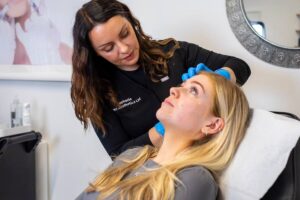
This is exactly where in-clinic treatments do the heavy lifting that skincare can’t. Polynucleotides and skin boosters address the hydration side directly, encouraging skin to hold and retain moisture from within rather than relying on topical hydration that evaporates within hours. A course of chemical peels addresses the texture side, lifting away the built-up dead skin cells that create roughness and dullness, and improving how light reflects off the surface.
The Treatments Behind the Look
Clients often assume they need one dramatic treatment to get this result, when in reality it’s usually a combination working together over a short course, rather than a single appointment. Hydration treatments and resurfacing work address genuinely different layers of the same overall look, which is why combining them tends to produce a more convincing result than either alone. Clients who try to shortcut this by going straight for the most intensive resurfacing option available, hoping to skip the hydration side entirely, often end up with skin that looks smoother but still lacks the luminosity that made the original look appealing in the first place.
It’s also worth being realistic about skin type. Glass skin looks different depending on your natural undertone and texture, and the goal for most clients isn’t replicating an identical look to whatever inspired the search, it’s applying the same underlying principles, hydration, smoothness, reflectivity, to get the best version of that effect on their own skin. Skin with naturally warmer undertones or a more textured baseline will still look luminous and healthy once treated properly, it simply will not look identical to a cooler-toned reference photo, and that is completely fine, the goal is your own best version of the effect rather than a carbon copy.
Building It Into a Realistic Routine
Maintenance matters more here than with a lot of other treatments, since hydration and surface texture both naturally decline again over time without upkeep. Most clients build this into an ongoing seasonal routine, a skin booster course every few months alongside occasional peels, rather than a one-off treatment they expect to last indefinitely.
Book a Skin Assessment
If you’ve been chasing this look through products alone without much success, it’s worth finding out what’s actually achievable for your skin. Visit nessaesthetics.com to book a skin assessment with Steph.