

Most people know PRP as the ‘vampire facial’, a skin rejuvenation treatment using your own blood plasma. Fewer realise that the same treatment, delivered into the scalp rather than the face, is one of the most well-evidenced non-surgical options available for hair thinning and early hair loss.
How PRP for Hair Loss Works
PRP for hair loss works on the same principle as facial PRP: platelet-rich plasma is separated from a small blood sample and reintroduced, in this case into the scalp, where the growth factors it contains can help stimulate dormant or weakened hair follicles back into a healthier growth phase. It’s particularly effective for early-stage thinning, where follicles are struggling rather than permanently gone.
This makes timing genuinely important. PRP tends to work best when there’s still follicle activity to stimulate, which is why we always encourage clients noticing early thinning, rather than advanced, long-standing hair loss, to have a scalp assessment sooner rather than waiting to see if it gets worse. The earlier the intervention, generally, the better the response. It’s worth being clear that PRP is not a solution for completely bald areas where follicles are no longer present, and Steph will always give you an honest assessment of whether your particular pattern of thinning is likely to respond well.
What Happens During Treatment
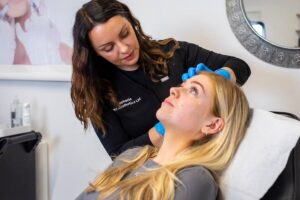
On the day, a small blood sample is taken in the same way as a routine blood test, spun in a centrifuge to separate the platelet-rich plasma, and then injected across the scalp using a fine needle. Some clients apply a numbing cream beforehand, though many find the scalp less sensitive than expected once the treatment begins. There’s no real downtime, some mild tenderness or pinpoint marks that fade within a day or two are the only visible signs you’ve had anything done.
A typical course involves several sessions spaced a few weeks apart, followed by maintenance treatments every few months to sustain results, since PRP supports follicles rather than permanently altering them. Many clients notice reduced shedding within the first couple of months, with visible improvements in density building over three to six months as the growth cycle responds. It’s a gradual process, and photographs taken at each visit are genuinely useful for tracking progress that can be hard to judge day to day in the mirror.
Who Is a Good Candidate?
It’s worth noting that PRP works best as part of a wider approach to hair health, alongside addressing any underlying causes such as stress, hormonal changes or nutritional deficiencies where relevant. Steph will talk through your history during a consultation to understand what’s likely driving your thinning before recommending a course.
PRP tends to appeal particularly to clients who are wary of long-term medication for hair thinning, or who’ve tried topical treatments without much success and want something more active. It’s not exclusive to any one demographic either, we see it requested by women noticing post-partum or hormonal thinning just as often as men noticing early pattern loss, since the underlying mechanism of stimulating existing follicles applies regardless of the cause, provided there’s still follicle activity present to work with.
Book Your PRP Hair Consultation
If you’ve noticed your hair isn’t quite what it used to be, it’s worth having it looked at properly rather than assuming nothing can be done. Visit nessaesthetics.com to learn more about PRP for hair loss or to book a consultation with Steph.